

How we run conversion rate optimisation
We are a remote-first team based in Delhi, India. Every project starts with a free 30-minute audit.
- Price
- Fixed in the quote after a CRO review
- Timeline
- Tests sized before launch and run in full weeks
- You keep
- The research and every test result, in writing
- Reporting
- A written result for every test
Where we look for lost sales
What we look at in each part of the journey, and how we decide a change has worked.
Landing and category pages
First impressions decide whether a visitor goes deeper. We check that the headline matches the ad or search result, that filters match how buyers choose, and that price and rating show on product cards without a tap.
Product pages
This is where the decision gets made. We test a real delivery date beside the price, sizes and colours as buttons with stock shown, and an add-to-basket button that stays visible on mobile.
Cart and basket
Cart abandonment usually comes down to unexpected costs or a reason to leave. Shipping and taxes are shown before checkout, the free-delivery threshold is clear and the coupon field is tucked away.
Checkout
Fewest steps, fewest fields, no reasons to doubt. We look at guest checkout, express wallets, address lookup and inline error messages. On Shopify, changes beyond the built-in settings need Shopify Plus.
After the order
The second order costs far less to win than the first. Clear delivery expectations cut "where is my order?" emails, and a one-question survey asks what nearly stopped the customer buying.
Tests big enough to measure
Research comes first, then tests sized for your traffic. We check the sample size before a test starts, and only call a winner when the numbers can carry it, so a false winner does not ship.
From audit to hand-over in five steps
The same order on every project. Your dates are set in the quote.
- Step 01
Audit
We hold a free 30-minute call about what you have today and what is going wrong.
- Step 02
Quote
You get a fixed scope, price and dates in writing.
- Step 03
Build
We build in your own accounts and show you progress each week.
- Step 04
Test
We check changes on a staging copy or a test set-up before they go live.
- Step 05
Hand over
You get documentation and a walkthrough for your team.
What we need from you
Analytics access, permission to run recordings and surveys, and a developer contact or theme access for the changes.
A/B testing mistakes that produce false winners
Most CRO programmes that fail tested sensible things and then read the results wrong. Each card shows what the mistake costs and what we do instead.
Stopping when it looks good
Checking the dashboard daily and calling it the first time B is ahead.
- What it costs
- Peeking like this inflates false positives badly. We fix the sample size before launch and stop on the planned date, in full weeks.
Testing tiny changes on small traffic
A new button shade on a page that takes 40 orders a week.
- What it costs
- The test can’t detect an effect that small, so it runs for months or ends in noise. We test bolder changes, or measure before and after instead.
Ignoring a skewed split
A 50/50 test that came out 53/47.
- What it costs
- That’s a sample ratio mismatch: a redirect, a bot filter or flicker is breaking the test. We check the split before reading any result.
Calling it on conversion rate alone
B wins more orders, but at lower order values.
- What it costs
- Revenue per visitor may have fallen. We agree the main metric before launch and watch guardrails like refunds and returns.
One test for every audience
Desktop and mobile visitors lumped together.
- What it costs
- A layout that helps on a phone can hurt on a laptop. We plan the segments up front rather than hunting for a good one afterwards.
Not writing it down
Last year’s winning test? Nobody remembers why it won.
- What it costs
- Every test goes in a log: hypothesis, screenshots, result and what we learned. It stops the same idea being tested three times.
The risks in conversion work, and how we handle them
Testing changes a live store that real customers are paying through. These are the things that can go wrong, and what we do about each one.
Flicker and slower pages
Client-side tools can show the old page before swapping in the variant, which slows things down and skews results. We keep variants light, use anti-flicker snippets carefully and check Core Web Vitals on each variant.
SEO side effects
We follow Google’s guidance on testing: rel=”canonical” on variant URLs, 302 rather than 301 for redirect tests, the same content for Googlebot as for visitors, and tests ended as soon as they’ve answered the question.
Recordings and consent
Heatmap and session recording tools collect behaviour data. We mask form fields, respect consent choices and agree retention settings with you before anything is switched on.
Seasonality
A test that runs over Black Friday or Diwali tells you about that week, not a normal one. We plan tests around your trading calendar and avoid reading results across big promotions.
Uplifts that shrink
Measured uplifts tend to come in lower once a change is live for everyone. We report the range as well as the headline number, and keep watching for a month after shipping.
Testing the wrong problem
If research points to price, stock levels or delivery costs, a test won’t fix it. We’ll say so, even when it means less testing work for us.
Work related to this service
A few projects close to this kind of work: what was needed and what we built.
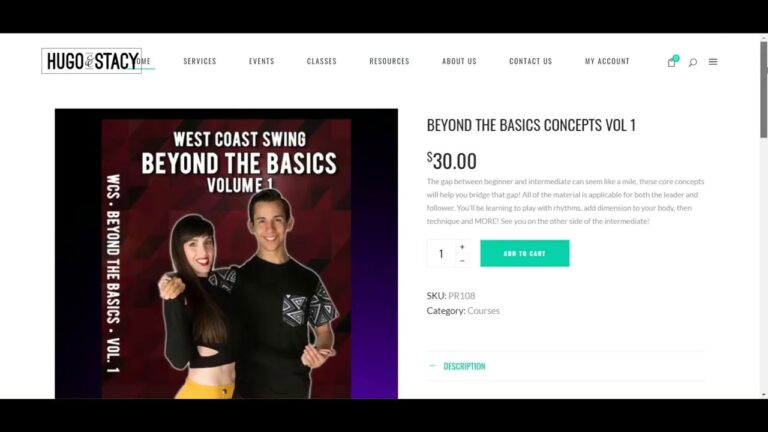
Hugo and Stacy dance courses
A store for dancers Hugo and Stacy, selling digital download dance courses with payment and instant download, hosted on AWS.
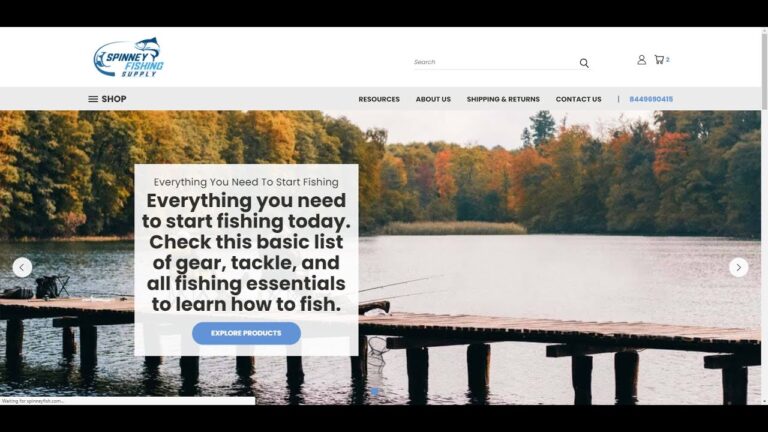
Spinney Fishing Supply on BigCommerce
A BigCommerce store for Spinney Fishing Supply, which sells fishing and boating supplies to beginners, hobbyists and professional anglers.

Vproteomics website redesign
A WordPress redesign for Vproteomics, a proteomics services company, built around its discovery and targeted proteomics services.
Ecommerce by industry
Each industry has its own stock, pricing and delivery rules. Pick yours to see the common problems and what we build.
- B2B wholesale and distributionTrade pricing, quotes, bulk orders→
- Health and beautySubscriptions and repeat orders→
- Home and furnitureLarge catalogues, delivery slots→
- Food and beverageFresh stock and fast fulfilment→
- Industrial and manufacturingParts catalogues tied to the ERP→
- Fashion and apparelSizes, variants and returns→
- Electronics and technologySpecs, bundles and warranties→
- Not listed?Tell us your industry→
About conversion optimisation
Anything else, ask on the audit call.
Not answered here? Ask on the free 30-minute audit call.
Book a free auditHow much traffic do we need for A/B testing?
It depends on your conversion rate and the size of change you want to detect. As a rough guide, pages with fewer than a few hundred orders a month struggle to test small changes. The calculator above gives a planning estimate; where testing is not viable we use research and before-and-after measurement instead.
Which tools do you use?
Whatever fits your stack and budget: GA4 for funnels, a heatmap and recording tool such as Microsoft Clarity or Hotjar, and a testing tool or your platform’s own features for experiments. Google Optimize closed in 2023, so older setups need replacing.
Will tests slow the site down?
Client-side testing tools can cause flicker and delay. We keep variants light, prefer server-side or theme-level tests where the platform allows, and check Core Web Vitals on every variant.
Can you change Shopify checkout?
On Shopify Plus, checkout extensions allow supported changes such as extra fields, upsells and content blocks. On other plans the checkout is fixed, so we focus on product pages, cart and the steps before checkout.
What if a test loses?
That is useful too: it stops a change that would have hurt sales. Every result goes into a log, so the next test builds on what you learned.
What’s a good conversion rate for an online store?
It varies too much by sector, price point, device and traffic mix for one good number. Your own baseline, split by device and channel, is the benchmark that matters. We’d rather see your rate climb steadily than compare it with an industry average.
How long should an A/B test run?
Until it reaches the sample size planned before launch, in whole weeks, and for at least two weeks so every weekday is covered. Stopping early because a variant looks ahead is the most common way to ship a false winner.
Can we do CRO without A/B testing?
Yes. With lower traffic we use research such as recordings, surveys and usability tests to make well-founded changes, then compare before and after while allowing for seasonality. It’s less certain than a test, and we say so in the report.
Do you redesign the whole site?
Rarely. A big redesign changes too many things at once to know what helped. We prefer a sequence of measured changes. If a redesign is needed, our ecommerce development team builds it and we test the riskiest parts first.
Certifications and partner programmes
Intelligize Digital is a registered partner of these platforms and hosts.
 ShopifyShopify Partner
 BigCommerceBigCommerce Partner
 WP EngineWP Engine partner
 AutomatticAutomattic for Agencies
- NNexcessNexcess partner
 HostingerHostinger partner
 BigCommerce Certified
 BigCommerce Certified
 Liquid Storefronts for Theme DevelopersShopify Certified
 Headless at Shopify for DevelopersShopify Certified
 Shopify FoundationsShopify Certified
Where do your buyers
change their minds?
Send the page that gets traffic but not enough orders. We will review it with your analytics and suggest the first test on a 30-minute call.
What happens next
- An engineer replies Within one business day, by email.
- A free 30-minute audit On a call with an engineer.
- A fixed quote It follows the audit. Nothing is billed before you agree it.